Tourist destination
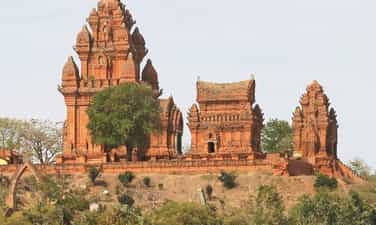
Poshanu Cham Tower
Po Sah Inu Tower is a place that preserves special historical and cultural values, with ancient Hoa Lai architectural style. This is one of the famous Phan Thiet tourist destinations that any tourist wants to visit when coming to Lam Dong. When you come here, you will be surprised by the ancient relic complex, the towers are made entirely from time-stained burnt bricks. Thanks to its special mysterious beauty, Po Sah Inu tower is known as a symbol of ancient Champa architecture and culture. Po Sah Inu Cham Tower is associated with a legend known to many Binh Thuan people. In the past, this land was inhabited by the people of the Champa kingdom. Po Sah Inu, the king's beautiful and gentle princess, was deeply in love with Po Sahaniempar, a Muslim lord from the Gia Lam region. Despite facing religious obstacles, their true love prevailed. To commemorate the gratitude and talent of Princess Po Sah Inu, people built a temple to commemorate her. Every year during the Kate season, people hold a festival at Po Sah Inu temple to celebrate and honor the beautiful princess with kindness. Po Sah Inu Tower has Hoa Lai architecture - one of the ancient art styles of Champa. This complex currently has 3 towers, but only the largest tower is still quite intact, the remaining 2 towers are somewhat damaged. The main raw material is red bricks bonded together with a special adhesive that until now we still cannot confirm what it is. The assumption that many people make is that it is some kind of plant resin. The main tower consists of 3 floors, about 15m high if counted from the inside of the tower to the top. Each bottom edge of each side of the tower is about 20m wide. Above the main tower there is a large door and a long, fixed main door facing the East where the Cham people's gods reside. The decorative shapes on the body and top of the Poshanu Cham tower all show symmetry and uniformity. With the remaining 3 directions West, South and North, 3 additional decorative fake doors were also built. In particular, you can observe that on the rolling arch of the West door, there will be carved strips of flowers and other strange images that no one has been able to answer until now. Besides, the Poshanu Cham tower is also built with a fairly tight space structure, with only large holes for ventilation under the windows. Inside the main tower is the stone Linga-Yoni altar, which is also the most sacred object in Hindu temples. The side tower worships the cow god Nandin, the mount of Shiva. This tower is only about 12m high and has the same architecture as the main tower but is somewhat simpler. The remaining sub-tower worships the Fire God, but now only a few details remain and is over 4 meters high, with only one door facing the East. Because of the heavy destruction, the decorative sculptures on the outside of the tower were also eroded, and the original lines were not intact. Every year, many festivals are held at the Poshanu Cham tower relic to welcome visitors. Furthermore, the Cham community in neighboring areas also often come here to pay their respects, hold ceremonies to pray for rain, pray for peace... to show their worship to the gods. The main festivals that often take place at the tower are: Rija Núga Festival, Poh Mbang Yang Festival: Held around the first lunar month. Kate Festival: Takes place around the 7th month of the Cham calendar (ie around September - October of the solar calendar) with many special performances. On this occasion, we will enjoy rhythmic dances to the sounds of traditional musical instruments such as Ginang drums, Paranung drums, Xaranai trumpets, Grong (six tams), Kanhi instruments... Besides, we can also freely pose and take photos in many styles from mysterious, traditional to modern. In addition, you can walk around the campus and there are other beautiful green areas. In the tower area, many Cham people live, so you can interact and learn about culture and people from them. Here you can learn about Cham folk culture through folk art performances, such as watching native people weave fabrics by hand. A trip to Phan Thiet cannot be complete without a journey to explore Poshanu Cham Tower!
Lam Dong
1772 view


Bao Dai Palace
Famous as one of the most beautiful palaces of King Bao Dai, Bao Dai III Dalat Palace with its beautiful space, modern European architecture and unique values of Art history is an attractive destination for tourists on their journey to Da Lat city. Bao Dai Palace III Dalat, also known as Palace III, "Summer Palace" is the most lavish and luxurious mansion in Dalat during the French colonial period. With typical French architecture located in the middle of a green pine forest, the artistic beauty of Palace III is associated with a part of the life of the last king of the Vietnamese feudal dynasty Bao Dai. Not only is it a historical destination, it also has its own unique imprint of the era, architecture and a beautiful natural space. Bao Dai III Dalat Palace is located at 1 Trieu Viet Vuong Street, Ward 4, 2.3 km from Da Lat city center, Lam Dong province. This mansion has a very special location, located in the middle of a vast green pine forest on Ai An hill with an altitude of 1,540 m above sea level, and is also the highest mansion compared to the other two palaces of King Bao Dai in Da Lat. Palace III was built in 1933 and was not officially completed until 1938. This architectural work was designed by architect Huynh Tuan Phat and French architect Paul Veysseyre. Bao Dai III Palace in Da Lat has a very luxurious architectural style compared to other palaces of King Bao Dai in Vietnam. Accordingly, the campus of Palace III has an area of about 1,000 square meters built into two floors. Both the front and back of Palace III are arranged with beautiful flower gardens in the style of palace gardens in France. In the poetic space of the mountains and forests with cool atmosphere and green pine trees, Palace III of Dalat is a very massive architectural work with bold European-style construction. The ground floor of Bao Dai III Dalat Palace is a place often used for meetings and banquets to entertain foreign guests. The entrance area has a reception room combined with many other function rooms. On the right side of the hall is King Bao Dai's room and library, on the left is the king's meeting room, office and entertainment room. King Bao Dai's office is designed with an architecture that combines interior and exterior landscapes, giving people living inside the feeling of being fully immersed in nature. In King Bao Dai's reception room, there are still a pair of wild buffalo horns hunted by King Bao Dai himself at K'rong Pha, and two pianos that Queen Nam Phuong and her princesses used. Inside King Bao Dai's office, there are also many important historical artifacts such as the emperor's sister's jade, military seals, statues of King Khai Dinh and King Bao Dai, or national flags of countries. The second floor area of Bao Dai III Dalat palace is the private living space of King Bao Dai's family, including the bedrooms of the king, Queen Nam Phuong and the princes and princesses. In particular, King Bao Dai's bedroom is designed with a modern style, the main color is yellow, the artifacts displayed in the room are still kept almost intact, especially outside the king's bedroom, a Vong Nguyet Lau is also built as a place for the king to watch the moon. At Bao Dai III Palace in Dalat, a special space that visitors can hardly miss when visiting is the wine cellar. This used to be a place to store rare wines, but still retains its ancient beauty, making visitors feel like they are returning to the past. Here visitors can admire old objects in an impressive space. Coming to Bao Dai III Dalat Palace, visitors will have the opportunity to fully immerse themselves in a space filled with impressive cultural and historical colors, and at the same time admire the most massive architectural work in Da Lat city from the French colonial period to today. Here, visitors will have a clearer sense of the life of King Bao Dai and his royal family members through the spaces and items still on display, from the office, reception room to private spaces such as the dining room, bedroom, the furniture is arranged harmoniously, without any fuss or extravagance. In addition to admiring the beauty of the architecture and interior of Dalat's Bao Dai III Palace, visitors also have the opportunity to enjoy an extremely poetic space with beautiful grounds including the royal garden, Ai An forest, lake... From this location, visitors can also see far away to see the valley and wonderful landscape of Dalat. Experiential activities at Bao Dai III Palace are also very attractive to tourists. Here, in addition to walking to admire the scenery, visitors can also rent a horse-drawn carriage to walk around Palace III to visit and explore. In particular, if you like royal culture, visitors can experience dressing up as kings to take check-in photos with impressive backgrounds, carrying luxurious and splendid royal colors. The climate in Da Lat is cool and temperate all year round, however the weather is not always favorable to make a trip to visit Bao Dai Palace III in Dalat. The best time to visit Palace III is from November to April, because at this time in Da Lat there is little rain and the weather is cool and dry. Bao Dai Palace III Dalat will be a great destination for tourists who are looking for a tourist destination that has both beautiful space and many historical and cultural values to explore. Coming to Palace III and admiring the ancient architecture in a poetic campus, breathing the fresh air and feeling a bit nostalgic about the royal life of the famous king will be a gentle, enjoyable experience for your journey to explore Da Lat city.
Lam Dong
1949 view


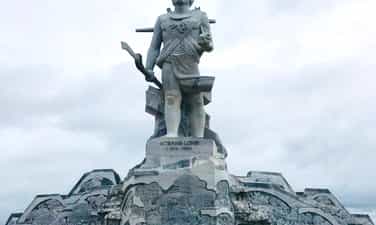
N'Trang Long relic site
N'Trang Long relic area is a complex of memorial works, honoring national hero N'Trang Long, leader of the uprising against the French in the Southern Central Highlands. The project is located in Lam Dong province, including the 18.5 m high monument of national hero N'Trang Long, along with other items to educate history, promote culture and be a place for spiritual and cultural activities for the people. The struggle against the French colonialists of the M'nong people led by N'Trang Long lasted from 1912 - 1935. For more than a quarter of a century (25 years), N'Trang Long gathered most of the M'nong people in the Lam Dong highland area today to join the fight against the French. The locations of the M'nong people's anti-French colonial movement led by the hero N'Trang Long are places that mark glorious and heroic victories against foreign invaders, demonstrating the resilient will to fight, the indomitable spirit, solidarity, and love of the Central Highlands people in the national liberation movement. After the war passed, this place still has traces of tunnels, trenches, ramparts, fortifications... with historical and cultural value in educating generations about the tradition of love for the homeland. To remember the merits and victories of fighting against the invaders, the authorities have ranked, invested, renovated and restored a number of places of the struggle movement led by N'Trang Long in Tuy Duc commune and built a monument in Gia Nghia city, visitors can visit, learn and check-in. Currently, to remember the merits and victories of fighting against invaders, the authorities have ranked, invested in, renovated and restored a number of locations of the struggle movement led by N'Trang Long in Tuy Duc commune and built monuments in Gia Nghia City specifically, such as: The remains of Bu Méra post have a total area of 1 hectare (100m x 100m). The former post was arranged quite scientifically, including a main door in the West - North, 2.5m wide and 2 side doors (escape doors) in the West - South and East - North connecting along the trench running down the Dak Buk So tributary. With an overall area of only 1 hectare, Bu Méra station contains an ecological sub-population with echoes of the Central Highlands mountains and forests; There are many types of large wood, aged from 70 to 90 years (regenerated wood, almost intact), along with many species of birds, squirrels, reptiles, etc. Currently, the relic has been restored and embellished with items such as moats, ramparts, gates, etc. to serve tourists. Bu Nor bon vestiges with an area of about 7 hectares, currently located in the protective forest of Quang Tan Forestry Enterprise with many types of wood of quite large size, still intact. Remains of "Henri Maitre Beer". Currently, Henri Maitre's grave remains intact. The grave has an area of about 3m2, the highest point is 40cm (above the ground), traces reflect the crimes of the French colonialists against the people of the Central Highlands ethnic groups; reflects the resilient and indomitable will to fight of the people of Lam Dong ethnic groups under the brave strategic leadership of national hero N'Trang Long. Monument to Hero N'Trang Long and the national liberation struggle movement of 1912 - 1935 at Dak Nur hill, Bac Gia Nghia ward, Lam Dong province. If you have the opportunity to visit the Central Highlands, don't forget to stop by the N'Trang Long relic site to learn more about the patriotism, love, and pride of the heroes of the Central Highlands ethnic groups!
Lam Dong
1820 view


UNESCO Global Geopark
When coming to Lam Dong Global Geopark, you will have the opportunity to explore the unique and longest volcanic cave system in Southeast Asia, as well as immerse yourself in the majestic and beautiful nature and indigenous people's culture among the vast Central Highlands. Geoparks are models for connecting and learning about Earth science through geotourism, where you can learn about the origins and tectonic processes of the Earth's surface. This model focuses on educating and raising awareness of residents and tourists, encouraging a green lifestyle and harmony with nature. Therefore, Geopark tourism is very suitable for the criteria of a green destination in the current context. Amidst the majestic Central Highlands, Lam Dong tourism not only has vast forests and unique gong culture, but also owns a global geological park, home to the longest volcanic cave system in Southeast Asia. Lam Dong Geopark has an area of 4,760 km². Dak Nong Global Geopark includes five communes: Krong No, Cu Jut, Dak Mil, Dak Song, Dak Glong and Gia Nghia city. This place has 65 geological and geomorphological heritage sites, including about 50 caves with a total length of more than 10,000m, along with craters and waterfalls. With international and national heritage values, Lam Dong Geopark was officially recognized by UNESCO as a Global Geopark in July 2020. Lam Dong Global Geopark has five dormant volcanoes. This is where much evidence of tectonic activities of the earth's crust is preserved more than 140 million years ago. In this area, scientists have discovered many fossil bones of prehistoric people, along with bronze arrows and ancient Vietnamese objects from nearly 7,000 years ago, made from stone, ceramics, bones and shells. The most prominent feature of the Global Geopark in Lam Dong is the longest volcanic cave system in Southeast Asia, formed from the eruption of Nam Blang volcano (Buon Choah). With about 65 geological and geomorphological heritage sites, the highlight is a system of nearly 50 caves, craters and waterfalls. Nam Blang volcano, Krong No commune, is the highest peak in a complex of five extinct volcanoes in Dak Nong Global Geopark. Nam Blang volcano is 601m high, of which the underground part is 59m deep. Inside these volcanoes lies the largest and most unique cave system in Southeast Asia, with many undiscovered secrets. Nam Blang volcano, Krong No commune, is the highest peak in a complex of five extinct volcanoes in Lam Dong Global Geopark. Nam Blang volcano is 601m high, of which the underground part is 59m deep. Inside these volcanoes lies the largest and most unique cave system in Southeast Asia, with many undiscovered secrets. Chu Bluk volcanic cave is a site of great geological and cultural heritage value, bringing unique experiences to visitors. Chu Bluk Cave, also known as Bat Cave, is about 25km long, located in Buon Choah commune, Lam Dong province. Located about 20km from the center of Krong No district, from Dray Sap waterfall to Buon Choah cave, this cave system includes more than 100 large and small caves formed from lava flows millions of years ago, hidden in basalt rock. The Global Geopark with its pristine tropical forest ecosystem has preserved biodiversity values, unique cultural, geological, and natural features, along with traces of prehistoric activities dating back tens of thousands of years found in caves. Most of the heritage sites of the Global Geopark have not been affected by humans, so these are ideal tourist destinations for those who like to explore the wild beauty of nature. Over millions of years of creation, Mother Nature has bestowed this Central Highlands region with a huge treasure. The Global Geopark is a place rich in tropical forest ecosystems and preserves many unique cultural, geological and natural features. All blend into a wonderful giant picture, creating a captivating beauty for this red basalt land.
Lam Dong
1889 view


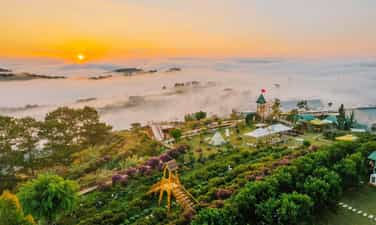
Cloud Hill
May Hill in Xuan Tho commune, Da Lat is still quite strange to many people because this tourist area has not been officially put into operation to welcome tourists. Although located in the residential area, the clouds are very peaceful, poetic and close to nature. The tourist area with an area of up to 1.5 hectares is known as a place to check-in, extremely hot rattan hunting. Besides the community tourism model design, cloud hill also has a prominent feature that is the view of the scenery from above to be beautiful. For those who like to watch the sunrise and especially the rattan hunting, the cloud hill is a suitable and perfect place. Dubbed a masterpiece of masterpieces of nature, it is not wrong to admire the beauty at the Dalat cloud hill. In the early morning, the fog covered the whole combination with the blue horizon, all created an incredible peaceful scene. The fresh, airy air and the scenery are covered by fog flying, these help the cloudy resorts are considered as one of the most beautiful cloud hunting places in Dalat to come in the morning. Camping at May Hill is also an extremely interesting experience, this activity is attracting a lot of tourists to the cloud hill. At night, campfire with family and friends, enjoying the specialties of Dalat and watching nature at night are definitely extremely relaxing and unforgettable moments. In addition to taking virtual photos with natural scenery, you can also take a shape to shoot with Zhao View Flower Garden, unique miniatures such as rattan chairs, wooden bridges ... With natural green hill background, this destination will definitely help you have extremely romantic photos. This place is also suitable for vintage -style photos because the cloud hill has a lot of small landscapes that are both modern but equally classic. To enjoy the beautiful scenery in Dalat clouds fully, it is definitely indispensable for a cup of warm coffee in the chilly weather of Dalat. Holding a cup of smoky coffee, watching the foggy scenery, floating at the feet in the chilly weather is an experience that you should try at least once.
Lam Dong
3849 view


Dalat flying royal garden
Known as the paradise of flowers, Da Lat owns many flower gardens with a variety of colors to create a beautiful overview that attracts many tourists to visit every year. In which the upper garden of Dalat is colorful of the famous flower varieties that have become the destination and check-in of many people today. Located at Khe Sanh Street, Mimosa Pass, Ward 10, Da Lat City, Lam Dong owns an area of 1.8ha, this is currently one of the large flower gardens in Da Lat. In each garden space, it is invested and meticulously invested, especially in each area will be clearly divided by each topic to help tourists easily visit. You will not be surprised by the diversity of many flowers and colorful areas arranged. Here you can not only see the beauty of fancy flowers, but also breathe the fresh air mixed with gentle and sweet flower fragrance.The name is like the name of the flying paradise area is built lovely and shimmering, anyone who comes here will become beautiful angels. Thanks to that, it brings unique and equally impressive souvenir photos. Arriving at the upper garden of Dalat can not miss the rose paradise area. Not only has a large rose garden and a large red hatching scale, but inside the campus, there is an impressive rose arch, worthy of an ideal virtual living spot for all visitors. You will have a feeling that is entering the space of fairy tales, discovering many new things and certainly cannot be admired by the unique beauty of this place. With a unique and different design in the color of colorful flower garden, Bali sky gate is now one of the most checked in points. With eye -catching turquoise tones and meticulously invested details, it has created an impressive background for tourists to be comfortable living. A striking flower and attractive beauty in the garden cannot be missed is hydrangea flower. Besides the beautiful blooming flower garden, you can check in on the road with 7 fresh rainbow colors, all forming the perfect overall and helps visitors get the most beautiful photos for themselves. Looking at the scenery and flowers in the upper garden of Dalat, it gives tourists the feeling of being immersed in nature. Besides helping you keep many memorable moments on the trip with beautiful and attractive space.
Lam Dong
3756 view


Dalat mushroom village
This location is located in Mang Lin village, Ward 7, Da Lat City and often open to visitors from 7:30 am - 17:00 daily. Da Lat Mushroom Village is developed as a farm model combining agricultural tourism with the entrance price of 80,000 VND/ person. The village has been researched, researched and built by Ms. Pham Thi Hoa for nearly 10 years. Up to now, the mushroom village is quite large with an area of up to 7 hectares. This place is close to the center of Da Lat city, but the cool space still makes us feel strangely peaceful. When coming here to visit, visitors will learn about different mushrooms and observe the mushroom care process of farmers. After that, you will enjoy the delicious dishes made from these mushrooms themselves. The mushrooms here are very nutritious, safe for health and have been exported to Japan. The trip to Dalat mushroom village will surely bring you many unforgettable experiences with friends and relatives. When you come here to visit, visitors will learn about different precious mushrooms and observe the mushroom care process of farmers. After that, you will enjoy the delicious dishes made from these mushrooms themselves. The mushrooms here are very nutritious, safe for health and have been exported to Japan. The trip to Da Lat mushroom village will definitely bring you many unforgettable experiences with friends and relatives.When coming here, visitors will be introduced by the garden owner about 11 different mushrooms grown here such as white abalone mushrooms, pink chi, linh chi, pink, tu pearl, golden gold, ... Each type has a shape, size and color that makes tourists extremely excited in the high hill. Healthy and pleasant. Many people wonder what is beautiful, but when you come here, you will admire the natural scenery. The two sides of the village entrance are shaded with trees and growing all kinds of flowers blooming, adding beauty to the landscape here. Although the decoration here is very simple and simple, but for those who love nature and passion for landscape photography, this is still a place not to be missed.If you have the opportunity to go to Dalat mushroom village, you must definitely pick mushrooms and enjoy delicious dishes made from fresh mushrooms. Mushrooms grown here are applied scientific farming technology, so they have high nutrition, good for health. Not only high quality, their taste is also very special compared to conventional mushrooms.
Lam Dong
3949 view


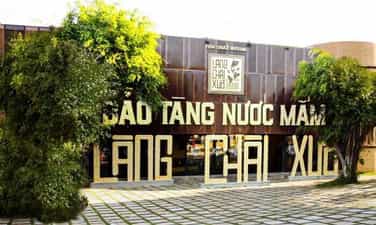
Fish Sauce Museum of Ancient Fishing Village
With a total area of 1,600 m2 and 14 small spaces designed in the contemporary way, this museum vividly reproduces the ancient Phan Thiet fishing village from the Cham Pa, King Nguyen, the French colonial period to the 40s - 60s. Visitors to the old fishing village museum will go through a time journey, returning 300 years ago in Phan Thiet fishing village - the capital of Vietnam fish sauce. The ancient fishing village museum is a place to preserve the flavor of traditional fish sauce, in order to inspire young people and introduce to foreign tourists about the "national soul, national drug" of the Vietnamese nation. With an impressive design and countless attractive and new interactive activities, the ancient fish sauce museum has become a cultural destination not to be missed for tourists when traveling to Phan Thiet - Mui Ne! Visitors to the old fishing village museum will be immersed in the atmosphere of Phan Thiet ancient town 300 years ago, visit the Ham Ho's house (the old giant), explore the "secret" to create the rich flavor of Phan Thiet fish sauce, and the role -playing interactions to make fishing villagers or matches in salt fields. Moreover, visitors also learn how to "careful" fish sauce like the ancients to evaluate the deliciousness of the fish sauce based on the color and taste in the light. In particular, you will have the opportunity to enjoy the taste of the famous fish sauce - a pure fish sauce, poured directly from the slow -ripe wooden tent in the old fishing village museum, an experienced experience that is hard to find anywhere else. In addition to the nostalgic space, the old fish sauce museum also has countless "virtual" check-in angles for young people with modern 3D aquarium with unique giant marine creatures. Do not forget to enjoy the fascinating Fishermen Show (Fishermen Show) on your trip to Phan Thiet!
Lam Dong
4604 view


Acacia Melaleuca Forest
Phan Thiet tourism has long been famous for white sand, golden sun and blue sea. But few people know that, this season Phan Thiet has a completely different and new color because the forest of acacia is brilliant yellow melaleuca. At the end of the year, the acacia forests in Mui Ne are in the blooming season, bright yellow at the sky, visitors go along Vo Nguyen Giap street (706b), or Mui Ne - Bau Trang and Hoa Thang - Hoa Phu, will encounter glue flowers racing to bloom, adorn, brighten a shiny yellow color. Acacia forest flowers blooming to brighten a corner of the sky, the flowers of Melaleuca flowers as a bright yellow highlight on white sand hill. In the distance, there are villas and green lawns that everyone wants to see, this will definitely be a photo background can not be more perfect for young people. The petals are like a squirrel tail, sometimes the fragrance is pleasant when the wind is over. In the blooming season, the golden forests become a unique feature and great accents of this sunny and windy land. Many of you also like a beautiful scenery as appearing in Korean films. The best time to take photos in these acacia forest is the early morning of about 8 - 10 hours, should not be taken at noon because it will be affected by the sunlight, so it will be very bright and the heat will not be taken much. Besides, the late afternoon frame is also a reasonable time to produce super virtual photos with sunset sunlight on the yellow flower acacia forest. The best is to catch the sunset sun in the photo, so it will be more and more artistic. Melaleuca leaves often bloom in March - April every year. However, at the end of December to January of the calendar, this acacia forest continues to race to brighten a vast area of white sand. Coming to Phan Thiet in the acacia season, Melaleuca leaves not only give you super virtual pictures but also bring extremely interesting and unforgettable experiences with this sunny and windy land. If you once travel to Phan Thiet, believe that you will not want to miss the beauty of Mui Ne melaleuca leaf flower forest in full bloom.
Lam Dong
4239 view


Bung Thi hot spring
Bung Thi Hot Spring is located in the core area of the Nature Reserve, bordering the three communes of Thuan Quy, Tan Thuan and Tan Thanh in Ham Thuan Nam district, Binh Thuan province. From Phan Thiet City, along Highway 1A to Dong Nai, when passing the Phan river toll station about 1.5km will meet the intersection, turn left to Thuan Quy street, about 7.5km will meet the right trail And going into this trail, running straight between the cool forest trees 5.5 km will reach the hot spring. Bung Thi hot spring has 2 hot and cold circuits marked by people with iron pipes. In hot water, sprayed from the ground with a temperature of more than 80 ° C, the Ta Cu Nature Reserve built the surrounding like a well. As for the position under the headwaters, the two water circuits will blend into each other to a lake. At this lake, the water is quite warm, visitors can soak their feet, relax under the water to dispel fatigue. Also from here, the water will flow to the lowest area of Bung Thi stream and continue to run through the forest canopy to create a cool water. People and tourists come here, most of them bring chicken eggs to put in hot water wells to boil, wait about 20-30 minutes is cooked eggs with the characteristic thickness of few places. Ta Cu Nature Reserve is considered as one of 221 important ecological regions in the world that need urgent preservation. This place is blessed with extremely rich animal and vegetation systems, especially with the presence of strange hot hot springs. Currently, this area has not been exploited so it is quite pristine. On weekends, especially on holidays, people and tourists everywhere come to hot springs to explore, rest and relax. Hot spring bung market with thousands of mountains and forests, fresh and cool air. This is a gift of nature mother with two hot and cold water streams and will be the No. 1 choice for visitors to choose to set foot. If it is invested and exploited early, this location will become an ideal and unique tourist destination, taking advantage of natural potentials to develop tourism.
Lam Dong
4248 view


