
 vn
vn en
en ja
ja ko
ko zh
zh


Journeying to Vietnam's Western and Northeastern Highlands to explore the 'pouring water season'.
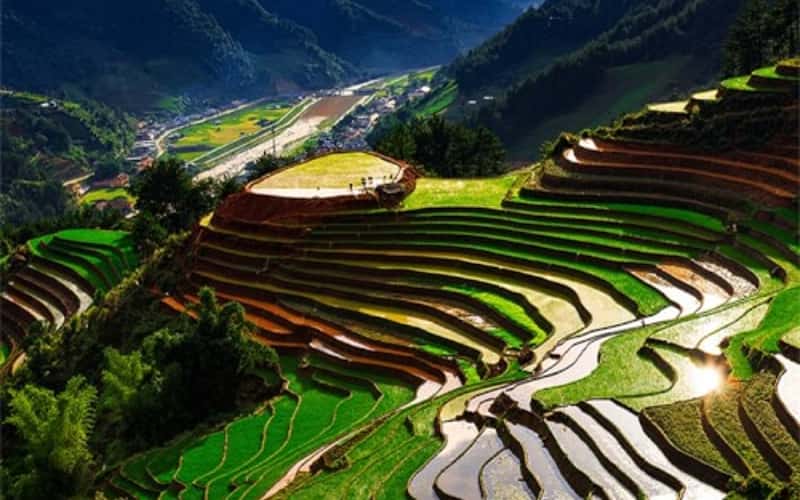
As June and July roll around each year, travelers from far and wide make their way to Vietnam's Northwest and Northeast highlands. They come to witness the spectacular "water pouring season," when the terraced rice fields are meticulously flooded in preparation for a new planting cycle, and to admire these stunning landscapes. This "water pouring season" has truly become one of the most unique and distinctive tourism offerings in the northern mountainous regions, an unparalleled experience found nowhere else.
Journey to the highland districts of Bát Xát (Lào Cai province), Mù Cang Chải (Yên Bái), Hoàng Su Phì (Hà Giang), and various districts in Lai Châu province to witness the terraced fields reaching up to the blue sky during the water-filling season, creating an absolutely breathtaking natural masterpiece.

Terraced fields during the water-filling season, truly a picturesque scene.
As the summer rains begin to fall, it's also the time when highlanders head to the fields to plow and plant, preparing for a new crop season. This is precisely when the once dry terraced fields become filled with water, revealing the magical beauty of the season known as 'Mùa nước đổ' (Water-Filling Season).
The Water-Filling Season, also known as 'mùa đổ ải', is when the highland communities bring water to their terraced fields in preparation for rice planting. This is a crucial stage that ultimately leads to the golden harvests seen across the terraced fields.
During the Water-Filling Season, water cascades across the terraced fields, layering them into endless, sparkling, and captivating tiers. It's a majestic sight that leaves anyone who witnesses it utterly awestruck. Amidst the wild mountains and forests, these shimmering, water-filled terraces create vibrant and alluring patches of color, captivating travelers completely.

Preparing for the new crop season
These terraced slopes are filled with water flowing from small mountain streams, shimmering like reflective mirrors stretching to the horizon. At this time, everyone in the community is busy with their own tasks, working diligently and urgently to channel water, build embankments, and plow the fields. The final step is transplanting the rice seedlings, all in anticipation of a new season yielding heavy, bountiful rice grains.
Because they rely on natural water sources, the highland communities can only cultivate one crop per year. Water flows from the mountain crevices, through bamboo pipes, cascading from one terrace level to the next. The terraced fields transform into vibrant, multi-colored paintings: some areas display the golden-brown hues of alluvial soil, others are dyed green by freshly sown rice seedlings, and still others reflect the colors of the sky – the rosy blush of dawn, the golden glow of sunlight, the clear blue of midday, or the deep violet as dusk descends. These contrasting, vivid colors create an absolutely stunning natural masterpiece.
Perhaps no artist could ever create works as vivid, natural, and full of unexpected beauty as the masterpieces fashioned here by the highland people, in harmony with nature and the vast expanse of sky and earth.
Travelers from far and wide who have visited this region have been captivated by the majestic beauty of the terraced fields across the Northwest and Northeast regions during the Water-Filling Season.
It's truly challenging to fully articulate the range of emotions one feels when standing at a high vantage point, gazing down at the overflowing terraced fields during the water-filling season. It's a truly majestic scene with winding contours of every imaginable shape, and fascinating interwoven patches of color. You could spend all day admiring it and never grow tired, as the colors constantly shift, reflecting the hues of the sky. If you're lucky, you might even witness the sunrise or sunset piercing through the clouds, casting fan-shaped rays of light across the rice fields. In the distance, the undulating mountains and forests complete this breathtaking and magnificent panorama.
The artistry of their centuries-old wet rice cultivation has created truly unique natural landscapes, transforming these rice fields into a magnificent masterpiece nestled between the vast sky and earth.
Once enough water has been channeled in, the local people proceed to sow the seeds. A few days later, as vibrant green rice paddies begin to emerge as far as the eye can see, they drain the water to allow the rice to sprout. And when these young sprouts push through the water's surface, the villagers once again guide water back into the fields to help the seedlings grow a little larger. At this stage, the terraced fields resemble multi-colored paintings: some areas bear the golden hue of alluvial soil, others are steeped in the fresh green of newly sown seedlings, and still others reflect the deep violet of the sky.
Each terraced field, one after another, stretches endlessly, then gradually cascades down towards the clear blue river below.
A distinctive characteristic of terraced fields is their location on steep, winding hillsides, primarily relying on rainwater. Therefore, the task of channeling water up to the fields is truly an "art form," demanding skillful, talented, and diligent hands.
The Water-Filling Season is truly a masterpiece, born from the harmonious blend of nature's beauty and human ingenuity.
Each terraced field, one after another, stretches endlessly, then gradually cascades down towards the clear blue river below. It all comes together like unique patches of color, distinct puzzle pieces forming an indescribably beautiful and harmonious work of art. The shimmering water, especially under the afternoon sun, becomes even more ethereal and enchanting, leaving an unforgettable impression. Once the fields are sufficiently watered, the villagers eagerly head to the uplands to sow seeds and transplant young rice seedlings, covering the landscape with a lush green 'coat'. Then they drain the water to allow the seeds to sprout. As the seedlings grow larger, they once again introduce water, nurturing the plants as they gradually turn golden, then eventually bloom. And so, during the Water-Filling Season, the region continuously changes its attire, displaying the reddish-gold hues of alluvial soil, the vibrant green of young rice shoots, and the glistening, clear water reflecting the sky.
The terraced fields appear like multi-colored paintings: some areas exhibit the golden hue of alluvial soil, others are steeped in the fresh green of newly sown seedlings, and still others reflect the deep violet of the sky.
The Water-Filling Season is truly a masterpiece, born from the harmonious blend of nature's beauty and human ingenuity. The mountainous terrain of this highland region, with its steep and winding slopes, means that the terraced fields themselves, and the intricate process of channeling water to them, are testaments to incredible creativity, diligence, and skill. The Water-Filling Season is a unique and captivating tourist attraction, drawing countless visitors to admire the vibrant life of this wild, majestic, yet profoundly poetic highland landscape.
During the Water-Filling Season, the region continuously changes its attire, displaying the reddish-gold hues of alluvial soil, the vibrant green of young rice shoots, and the glistening, clear water reflecting the sky.
Visiting the highlands during the Water-Filling Season also offers a chance to meet and witness firsthand the diligent labor of the local people, and to understand how they create these magnificent masterpieces. Some build dams and reinforce embankments, weeding out wild grasses, while others plow and prepare the fertile land, or repair irrigation systems. Men lead buffaloes to plow the fields or cultivate the soil with small plows, skillfully moving from one terrace level to the next. Women, dressed in traditional ethnic attire, sow seeds, pull up and transplant rice seedlings; many carry their infants on their backs or let their children play in a dry spot nearby, allowing mothers to both watch over their little ones and work. The atmosphere during this new season is truly joyful and bustling.
The terraced fields are like multi-colored paintings: some areas display the golden-brown hues of alluvial soil, while others are dyed green by freshly sown rice seedlings.
Whether large or small, these terraced fields are a unique cultural feature, showcasing the ingenious skill of the highland people in harnessing nature to sustain their lives. The artistry of their centuries-old wet rice cultivation has created truly unique natural landscapes, transforming these rice fields into a magnificent masterpiece nestled between the vast sky and earth. During the Water-Filling Season, water cascades across the terraced fields, layering them into endless, sparkling, and captivating tiers. It's a majestic sight that leaves anyone who witnesses it utterly awestruck.
Travelers from far and wide who have visited this region and admired the majestic beauty of the terraced fields across the Northwest and Northeast during the Water-Filling Season, immersing themselves in nature and the splendor of the mountains, forests, and sky, will experience the diligent, rustic, and hospitable working life of the highlanders. These experiences will create unforgettable impressions, leaving them longing for many more opportunities to return.
Top Spots to Admire the Terraced Fields During the Water-Filling Season in the Northwest and Northeast:
Bát Xát (Lào Cai): The scenery in Bát Xát resembles a vibrant natural painting, especially in the communes of Ngải Thầu, Dền Sáng, Y Tý, A Lù, and Khu Chu Lìn.
Sa Pa (Lào Cai): Here, you can admire stunning terraced fields during the water-filling season in villages like Tả Van, Tả Phìn, Hầu Thào, Trung Chải, and Lao Chải.
Hoàng Su Phì (Hà Giang): The beauty of the terraced fields in Hoàng Su Phì has been recognized by the State as a national heritage site.
Mù Cang Chải (Yên Bái): La Pán Tẩn and Chế Cu Nha are two communes boasting the most beautiful terraced fields in Mù Cang Chải.
Tú Lệ (Yên Bái): Home to a terraced rice valley nestled between the three high mountains of Khau Phạ, Khau Thán, and Khau Song.
Lao Cai 5315 view
Update day : 06/08/2023
Source : Văn hóa và phát triển Affiliate links

Monuments close by
See all
Thuong Temple - Lao Cai
Lao Cai Thuong Temple is also named Saint Tran Tu. Lao Cai Thuong Temple was built on land in Bao Thang street, Chau Thuy Vi, Hung Hoa province, now Lao Cai ward, Lao Cai city, Lao Cai province. Thuong Temple was built during the Le dynasty, Chinh Hoa era (1680 - 1705). It is a place to worship the temperate Duke Hung Dao Vuong - Tran Quoc Tuan, who made great contributions in the career of protecting the country's mountains and rivers. A great historical celebrity, a sacred and noble Saint in the minds of generations of Vietnamese people. Located on Hoa Hieu hill in Mai Linh mountain range with an altitude of 1200m above sea level. Thuong Temple was built in the ancient architectural style of the letter Cong, following feng shui theory which is both majestic and very dignified. The Thuong Temple area has a charming natural landscape and a harmonious combination of traditional architecture and indigenous culture, giving the temple a majestic and splendid appearance. Reflecting on the Nam Thi river, this place once had an extremely important position in the defense strategy against invaders. Today, near the trade gateway between the two provinces of Lao Cai (Vietnam) and Yunnan (China), this sacred land at the tip of the Fatherland welcomes tens of thousands of domestic and foreign tourists every year. commemorate the national hero. Right from the moment they step foot at the temple gate, visitors can admire the beauty of a 300-year-old banyan tree spreading its branches, under the shadow of the ancient tree is a shrine worshiping Ba Chua Thuong Ngan (Queen of the Green Forest). Legend has it that during the resistance war against foreign invaders, she contributed to fighting the enemy to protect the territory of the South. To thank her, the people built a shrine right under the banyan tree with lush branches and leaves. In the main temple area, the horizontal painting "Land of Literature" is hung in front of the Nghi gate, on both sides there are two parallel sentences: "Vietnamese spiritual spirit is not built, Dong A's spirit lasts forever", meaning: " Vietnam's sacred monument stretches across the sky, the Tran Dynasty's pride remains forever. On the back of Nghi Mon's interior, there are the words "Quoc Thai and Dan An" with two parallel sentences: "Heaven and earth are gentle, heaven and earth are old; The golden flower grass is different, the money flower grass" means: "Heaven and earth are still the same, heaven and earth are old; The grass and flowers today are different from the grass and flowers of the past." Thuong Temple was built spaciously with 7 main worship spaces including: The Palace for worshiping Buddha Shakyamuni, The Palace for worshiping the Three Courts of Thanh Mau; Altar of Saint Tran Hung Dao; The palace worships the King and his father Ngoc Hoang... and the altars on the Left Vu - Huu Vu sides worshiping Lady Nhi Son Trang, Twelve Fairies, Attending God and the Temple Boy... are all arranged. placed in order. Next to the Thuong Temple is a square communal house with 4 doors and 8 flanking dragons. In the middle of the communal house is a golden turtle with a stone stele engraved with the name "Holy Tran". This place used to be a resting place for military officers on patrol. Today, it is an ecological forest with all kinds of plants to protect the environment, serving tourists to visit and rest to enjoy the fresh climate. Thuong Temple is located in a cultural relic complex with Tan Bao pagoda, Am temple, Mau temple, Cam temple, Quan temple. In particular, Thuong Temple is one of the most famous sacred temples in the system of temples and pagodas in Lao Cai. Through many restorations and embellishments, in 1996, Thuong Temple was ranked as a National Historical and Cultural Monument. Every year, Thuong Temple holds a festival on the 15th day of the first lunar month, attracting the attention of many domestic and foreign tourists to visit and worship. Source: Vietnam Tourism
Lao Cai
8989 view
Rating : National monument
Nguyen Thai Hoc historical relic site
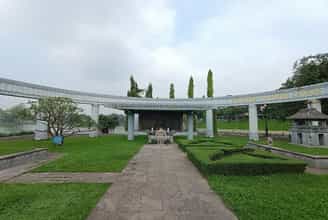
The grave site of Nguyen Thai Hoc and soldiers in the Yen Bai uprising in 1930, located in Yen Hoa park (30 hectares wide), Nguyen Thai Hoc ward, Yen Bai city, built in 2001 . Nguyen Thai Hoc was born on December 1, 1902 in Tho Tang, Vinh Tuong district, Vinh Phuc province. He was a patriot right from the time he was in a colonial school. He sent a letter to Governor General of Indochina Alexandre Varenne, a member of the French Socialist Party, calling for social reform in Vietnam. The Governor-General of Indochina did not pay attention to what Nguyen Thai Hoc suggested. On December 25, 1927, Nguyen Thai Hoc and his colleagues organized the establishment of the Vietnam Nationalist Party, and he was elected Chairman. The Vietnamese Nationalist Party was hunted down and arrested by the authorities. Faced with the risk of the Vietnamese Nationalist Party being broken up, Nguyen Thai Hoc, Nguyen Khac Nhu and Pho Duc Chinh decided to carry out a "general armed uprising". If you fail, it is also an example for the next generation to follow, "If you don't succeed, you will become a good person". The uprising force consisted of the Vietnam Nationalist Party, mainly red loincloth soldiers belonging to Companies 5, 6, 7, Battalion 2, 4th Tonkin Red Loincloth Soldier Regiment. Green loincloth soldiers did not participate in the uprising. On the night of February 9 to 10, 1930, the Yen Bai uprising broke out. The insurgent army killed most of the officers and non-commissioned officers in private houses, coordinating with the two-armed insurgent army and soldiers in the red loincloth station. 5 and 6 posts under rebellion. In front of the barracks yard, a representative of the Vietnam Nationalist Party read the article "Hit Uprising" with the slogans: "Drive the French enemy back to France. Bring the South back to the South. Let hundreds of them avoid suffering. More happy part". The flag of the Vietnam Nationalist Party flies above military camps and offices. Due to not being able to attract all the green loincloth soldiers No. 7 and No. 8 on the high station, the force was thin, so the insurgents were knocked out of their occupied positions, and the uprising was drowned in a sea of blood. Five days after the Yen Bai uprising, Nguyen Thai Hoc organized an uprising in Vinh Bao and Phu Duc, advocating to take over all of Hai Phong. The insurgents captured the district capital of Vinh Bao and killed district governor Hoang Gia Mo, a cruel and greedy mandarin. With a fierce counterattack by the French army with modern weapons, the insurgent army was destroyed. Nguyen Thai Hoc escaped due to the protection of the people. With a number of remaining prominent party members of the Vietnam Nationalist Party, Nguyen Thai Hoc discussed and planned to reform the Party and change the Party's strategic and operational direction. As soon as this policy was launched, on February 20, 1930, Nguyen Thai Hoc was arrested in Co Vit hamlet (Chi Linh, Hai Duong). On March 23, 1930, he was sentenced to death. On June 17, 1930, France sent Nguyen Thai Hoc and 12 other soldiers of the Vietnam Nationalist Party in Yen Bai to the guillotine. Stepping onto the scaffold, before putting his head into the guillotine, Nguyen Thai Hoc shouted: "Long live Vietnam!". France had to admit that the Yen Bai uprising had dealt a fatal blow to the colonial government. Nguyen Thai Hoc historical site marking the "Yen Bai Uprising" currently includes a mausoleum area, a monument area, a reception area, a memorial stele and a bonsai garden. Monument to Nguyen Thai Hoc and his associates during the Yen Bai uprising in 1930 at Yen Hoa Park, Yen Bai city. Most prominent in this area is the famous saying of Nguyen Thai Hoc, which became the main action motto and ideology of the Vietnam Nationalist Party, which is "If you are not successful, you will become a man", which was considered by the insurgents as a saying. swear to death. Although the Yen Bai uprising was not successful, patriotism is eternal. That's why, in our country, many places take the name Nguyen Thai Hoc to name avenues and schools. Mr. Phan Boi Chau wrote an oration about the Yen Bai uprising and the key figures of the uprising. Nguyen Thai Hoc historical relic site, Yen Bai city, Yen Bai province was recognized by the Ministry of Culture (now the Ministry of Culture, Sports and Tourism) as a national historical relic on March 5, 2019. 1990. Source: Yen Bai province electronic information portal
Lao Cai
8864 view
Rating : National monument

Mother Goddess Temple Lao Cai
Mau Temple is located in group 4, Lao Cai ward, Lao Cai city. The temple is located at the confluence between the Nam Thi and Red rivers flowing into Vietnam. This is also the international border gate of Lao Cai (Vietnam) - He Khau (Yunnan - China) and also the 102nd milestone in the Northwest border region. Mother Temple is a place to worship the Holy Mother Princess Lieu Hanh, a compassionate deity who exorcises evil spirits, helps poor people, and helps the court fight against foreign invaders and protect the sacred border areas of the Patriarchate. country. At the same time, she is a heroic mother in the folk subconscious of the Vietnamese people. The custom of worshiping Mother Goddesses in our country has gone through a long history. This is not only a worship custom imbued with national identity, but it is a common spiritual need of our people from the early period of building and defending the country until now. until today. Beliefs and customs of worshiping the Mother Goddess originate from the sense of ancestral remembrance, respect, gratitude, trust and have a profound moral educational meaning that is still of value to our generations today. . Holy Mother Lieu Hanh has been deeply imprinted in the subconscious of Vietnamese people in general and Lao Cai in particular since the 16th century. Through the ups and downs of history until today, our Vietnamese people have named her Mother Nghi. Thien Ha, always wish the Holy Mother to help "The world is peaceful - The country is peaceful and the people are peaceful - Phong Dang is in peace". Mother Goddess Lieu Hanh is a vivid symbol in daily life, but is very sacred in the mental life of Vietnamese people. In her subconscious, she is a Fairy, so she has Fairy magic; As a Buddha, one should carry Buddha's thoughts; As a Mother, she should have the qualities of a mother; is Holy so it is sacred; He is a child of good family, so he is educated, knowledgeable in history, and good at singing and poetry. In her, she has the filial piety of Confucianism and the magic of Taoism. That's why, Holy Mother Lieu Hanh is an image, one of the Four Immortals, the Mother of Heaven who has been reminded and educated to us for many generations: "In August, the anniversary of my father's death - in March, the anniversary of my mother's death." In Lao Cai, Mau Temple is located in the Thuong Temple Relics complex - a place to worship and remember the great contributions of the National Duke of Moderation - Hung Dao Dai Vuong - Tran Quoc Tuan. Mau Temple and Thuong Temple are also places with an important strategic position, a milestone in the Northern border of the Fatherland and a red address of the nation's historical and cultural roots. Mau Temple was built in the early 18th century, located in Lao Nhai village (now Lao Cai City), behind the temple is leaning against an ancient wall built by Liu Vinh Phuc insurgents to fight against foreign invaders. protect the borders of the land. Therefore, the Mau Temple was conferred three ordinations by the Nguyen dynasties: Tu Duc in the sixth year (September 24, 1853); Tu Duc in his 33rd year (November 24, 1880); Khai Dinh's 9th year (July 25, 1924). Located at the national border gate, on the international trade route, despite going through hundreds of years with many ups and downs of history, Mother Temple has not only become a sacred border landmark. Not only is it visited by people and tourists from all over the country and internationally, it is also a spiritual cultural milestone in the northern border region of the country. Mau Temple was recognized by the Ministry of Culture, Sports and Tourism as a National Historical and Cultural Relic on January 26, 2011. Source: Lao Cai province electronic information portal
Lao Cai
8440 view
Rating : National monument

Yen Bai city stadium ceremony platform
Yen Bai City Stadium Stadium, Hong Ha Ward, Yen Bai City is where Uncle Ho stood and talked to the people of Yen Bai province on September 25, 1958. This is a National Historical Site recognized by the Ministry of Culture and Information on November 16, 1988. The original ceremony is the grandstand of the old town stadium. The courtyard and ceremony platform are located in a densely populated area, the center of the former provincial capital. The town stadium dates back to the French colonial period. After completing the conquest and establishment of Yen Bai province (1900), in 1905, France established a legion camp to protect their government. To serve the spiritual life of soldiers, especially cultural and sports activities. In 1927, France built this stadium to organize festivals and football activities, but around the stadium were only built into high mounds without any stands, and it was not completed until 1930. Since then, France has regularly organized fun and entertainment activities here, invited football teams from Hanoi, Phu Tho, Tuyen Quang to compete, and also organized many days of "Western festivals" at the stands. this town stadium. In 1954, when peace was restored, Yen Bai province advocated restoring the football field into a town stadium. In January 1957, the province built a grandstand (the current grandstand) and a wall surrounding the field in an oval shape. The most important historical event was on September 25, 1958, the Government delegation led by President Ho Chi Minh visited Yen Bai province. During his time working in the province, at the request of President Ho Chi Minh, the Provincial Administrative Committee chose the town stadium as a meeting place for Uncle Ho to talk to people of all ethnic groups in the province. At that time, Yen Bai province was one of the most difficult provinces in the North, having just gained independence, the war was heavily destructive, most of the terrain was mountainous, sparsely populated, low educational level, and many victims. Nomadic farming, superstitions still abound, life is still extremely poor. During the most difficult time, Uncle Ho visited Yen Bai. Early in the morning of September 25, 1958, nearly 5,000 officials and people of Yen Bai town's ethnic groups and people from neighboring areas eagerly flocked to the rally to see Uncle Ho and hear his voice. Coming out of the provincial team, Uncle Ho went to the stadium and stepped onto the ceremony platform amid the thunderous cheers of his compatriots. After everyone was silent, Uncle Ho started talking. He cordially visited officials and people, pointing out practical actions. He mentioned many issues from national unity, increasing production, and practicing thrift. After talking, Uncle Ho joined the entire Yen Bai people in singing the song "Unite". From the platform, he left to return to work amid the applause and majestic songs of the people of the province. On May 31, 1966, a bombing by a US aircraft collapsed a corner of the stadium. In 1977, the stadium was repaired, replacing the arched door with a square door, the entire architecture remained the same. . In 2016, the Ceremonial Monument area was renovated and upgraded. The monument and the entire architecture of Uncle Ho's memorial area are designed in traditional architectural style, simulating the memorial architecture of Uncle Ho in Kim Lien - Nghe An, Uncle Ho's hometown. With that cultural and historical significance, this place is a destination, an address for people and tourists to visit and burn incense to commemorate Uncle Ho, forever a place to preserve sacred memories of the Leader. Great - President Ho Chi Minh in the hearts of the people of Yen Bai province, is a traditional educational address for young generations today and tomorrow. Source: Yen Bai province electronic information portal
Lao Cai
8156 view
Rating : National monument
Cam Duong revolutionary base area
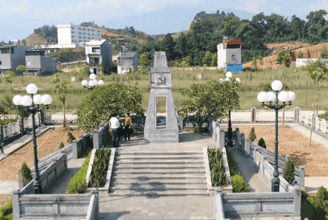
Cam Duong base area is located in Da 1 village, Cam Duong commune, Lao Cai city, Lao Cai province. Cam Duong and the surrounding communes of Xuan Giao and Gia Phu are lands rich in patriotic traditions and resistance to foreign invaders. The Cam Duong - Xuan Giao - Gia Phu guerrilla area played a very important role in the resistance war against the French in Lao Cai. That is the first resilient base, the direction point for implementing the Resolutions of the Lao Cai Provincial Party Committee on Party building, establishing party cells, establishing resistance administrative committees, and building unions. patriotic, formed a guerrilla team. Cam Duong was the site of the earliest armed uprising in Lao Cai. Cam Duong revolutionary base was born during the extremely difficult period of the resistance war against the French period (1948-1950). Built in the middle of the enemy's rear area and located in an important strategic position, the Cam Duong guerrilla zone became a springboard for expanding the construction of other guerrilla zones. Delegations of cadres from the rear (Luc Yen-Yen Bai region) returning to Lao Cai used Cam Duong as a secret gathering place to sneak deep into Lao Cai town, up to Muong Bo, Binh Lu, Phong Tho or to Nam Pung, Bat Xat, built base areas, built an anti-French movement in the enemy's rear area. In particular, Cam Duong is truly a belt and buffer zone close to the enemy's headquarters in Lao Cai town. During the Le Hong Phong Campaign to liberate Lao Cai, reconnaissance forces, military intelligence and the 148th Regiment all departed from Cam Duong. Cam Duong - Xuan Giao - Gia Phu guerrilla area for a long time was also the location for the leadership agency of the Provincial Party Committee and Lao Cai Provincial Team, many important meetings of the province were held here. Cam Duong revolutionary base area was recognized as a national revolutionary historical relic in 1995. This is where Cam Duong Party Cell, the first rural Party cell, was established on October 10, 1948. The Cam Duong base area is also preserved by the people and the Commune People's Committee, such as the stilt house - where the first rural cell was established; gathering shack; gunpowder mortar; alarm drums and many guns and ammunition; swords and self-made mines of Cam Duong guerrillas. Currently, the Cam Duong revolutionary relic site has been renovated and a traditional gallery built in Cam Duong commune associated with the name of the relic to meet the people's wishes, as a place to educate about historical traditions. heroic history of fighting against foreign invaders to win national independence for the younger generation. Source: Military Region 2 Newspaper
Lao Cai
8124 view
Rating : National monument
Nearby tourist attractions
See all
Ham Rong Mountain
Ham Rong Mountain - with the image of natural cliffs stacked on top of each other forming the shape of a dragon's head, has become an eco-tourism area that attracts the most young people in Sapa. Past the ticket gate, you will see the stone stairs leading up to Ham Rong Mountain. Remember to arrange a reasonable time to fully visit this majestic mountain. It will take you about 2 hours to fully visit Ham Rong Mountain Ham Rong Mountain eco-tourism area was built to include 3 main areas: Ham Rong Flower Garden, Thach Lam Stone Garden, Ham Rong Peak. You will have the opportunity to see the panoramic view of Sapa town from above. This place is also especially popular with photographers because you can capture the frame of Sapa town hidden among the white clouds like a fairyland. To reach Ham Rong Mountain, it will take you a few minutes to walk to the ancient Stone Church, located near the center of Sapa town. If you rent a motorbike to actively move around, you can park it at the resort gate. The parking lot is run by the barbecue sellers themselves, but rest assured it won't be cut off. Parking prices will depend on the time of your visit. In case you do not know the way, rent a hotel far from Sapa town center, you can choose a motorbike taxi or taxi to get around. The locals are very familiar with the roads and because it is such a famous tourist destination, there is no one who does not know Ham Rong Mountain. The distance is quite short, so you can rest assured that you will leave the trip to the drivers. The central flower garden at Ham Rong Mountain is an area that owns flower trees skillfully arranged by talented artisans into the extremely beautiful and sophisticated word Sapa, with a very European and very strange Western style. You can climb up the higher stone steps to get a panoramic view of the beautiful flower garden. The flowers here are all imported from France, Russia... along with hundreds of Japanese cherry trees tested planted in Vietnam. There will soon be another European flower seed production area. You can freely buy flower varieties to plant at home to admire every day. Thach Lam Stone Garden seems to make you lost in a fairyland with stones that remind you of dragon claws and dragon scales, looking very unique and interesting. This area has many giant cliffs, which are natural creations, so you will be amazed by the wild beauty that nature bestows. Thach Lam Stone Garden is the most chosen place to check-in at Ham Rong Mountain because of its small, winding, romantic roads, the maze of rocks that you can't find the way out... Can you feel the enchantment of tree nature? Is there a mortar here yet? The Japanese peach garden at Ham Rong Mountain will bloom extremely beautifully on New Year's Day. There are also varieties of faded peach trees, deep peach trees belonging to the group of ancient peach trees with extremely wide flower canopy, big beautiful flowers, thick petals like peach blossoms. Every spring, the peach garden at Ham Rong Mountain is crowded with families and relatives coming to visit and enjoy the flowers, so the atmosphere is always bustling and full of laughter. The entire orchid garden has a total of 200 different orchid varieties. Because the climate is cold all year round at 15 - 18 degrees Celsius, this flower grows very well. Orchids are rare and expensive flowers because of the elegant and elegant beauty they bring, but taking care of them is quite difficult. You don't have to waste time looking for any orchid gardens in Sapa because Ham Rong Mountain is one of the places with the largest concentration of orchids. If you fall in love with this type of flower, you must definitely go to Ham Rong Mountain orchid garden once. in that life. Cloud yard, also known as Thien Dinh yard, is the "coordinate" for the best view at Ham Rong Mountain. Have you ever known the feeling of clouds curling under your feet, floating on the clouds? Looking down from San May, you will see all of Sapa town, Muong Hoa valley, Cat Cat village and even beautiful, poetic terraced fields. Follow the cliff and walk another 10 minutes to the brilliant Heaven Gate when the golden sunlight shines through the clouds. This valuable moment will become your unforgettable memory at Ham Rong Mountain. Many famous photographers from professional to amateur have traveled far and wide to come here to hunt clouds through their wonderful lenses. It will be more perfect, if you can wait until sunset, the sunset is more brilliant and perfect than ever. When coming to Ham Rong Mountain, you need to note the following points. Choosing the most beautiful time of the year to visit the peach blossom garden at Ham Rong Mountain is very right when you plan a spring trip with family, friends or colleagues. Ham Rong Mountain also owns many types of cold flowers of temperate climate such as hydrangea, dahlias... and countless other unique flowers. You should visit Ham Rong Mountain in March and April - the months when flowers bloom most beautifully in Sapa. At this time there is less fog so you can see more beautiful scenery. You can also take the opportunity from April to June to visit Ham Rong Mountain when you want to catch the scene of terraced fields in the rainy season, looking like magical silver mirrors. According to the experience of many backpackers from the travel association, you should avoid the months of July and August because at this time the road is very slippery due to heavy rain.
Lao Cai
7674 view
October to May

Sapa city
Located in the floating clouds, Sapa town looks like a foggy city, creating a charming landscape painting. Coming to Sapa, visitors can relax with the fresh, cool atmosphere, with many diverse nuances. Traveling to Sapa, visitors can travel by many different types of vehicles such as motorbikes, cars, or by horse-drawn carriage from Lao Cai city or Binh Lu (Lai Chau). Sa Pa has Ham Rong Mountain right next to the town, any tourist can go up there to see the panoramic view of the town, Muong Hoa valley, Sa Pa, Ta Phin hidden in the smog. Currently, with human hands embellishing, Ham Rong is truly a fruitful landscape of Sa Pa. Coming to Ham Rong, visitors feel like they are lost in a fairy garden, with clouds covering their bodies and bright, colorful flowers on the ground. In Sapa town there is also an ancient church made of stone, and from here going back to the northeast, on the way to Ta Phin cave, there is a monastery built almost entirely of stone on a clear, airy hillside. Going up about 3 kilometers we will see a cave. In the cave, many stalactites create interesting shapes such as dancing fairies, sitting fairies, distant fields, and sparkling forests. More specifically, when coming to Muong Hoa valley, there are 196 islands carved with many strange images of ancient inhabitants thousands of years ago, but many archaeologists have not yet been able to decode that information. The ancient carving site has been ranked as a national monument and is being proposed by our State to be ranked as a world heritage site. Here there is also Silver Waterfall from a height of over 200m, the rushing water creates the sound of mountains and forests. Sa Pa is also the "kingdom" of flowers and fruits, such as peach blossoms, large yellow peaches, small yellow peaches, queen plums, purple plums, tam hoa plums, gladiolus flowers, plum flowers, pear flowers, peach blossoms, chrysanthemums, roses... especially the immortal flowers that live forever. Coming to Sapa in the snowy season, visitors will also admire surprisingly beautiful natural scenery that few places have. The green color of rice fields on terraced fields is replaced by the white color of snow, creating an extremely majestic scene. There are beautiful and enchanting poetic scenes, there are herds of ancient roan cows wearing bells grazing leisurely, there are beautiful pine forests shimmering magically under the sunlight... Coming to Sapa, we can shake off all the worries of life, where time stops so we can leisurely and freely enjoy the sky and earth.
Lao Cai
7537 view
From January to December

Fansipan peak
Fansipan peak, also known as Phan Si Pang, Fansipan is located in Hoang Lien Son mountain range, the peak is far from TT. Sa Pa is about 9km southwest. Fansipan peak is adjacent to two provinces, Lao Cai and Lai Chau, in the Northwest region of Vietnam. This place has rolling mountain terrain, steep cliffs, and rough rocky roads. Fansipan's weather at night turns cold. The higher you go, the deeper the temperature drops. For every 100m you go up, the temperature drops 0.6 degrees Celsius. You can go to Fansipan at any time of the year, because every season Fansipan is beautiful in its own way. Spring (February - April of the solar calendar). In the spring, visitors to Fansipan often visit temples on the mountain to pray for good luck and peace. In addition, this season plum and peach blossoms bloom throughout the Northwest mountains and forests, and the weather is chilly, making many tourists excited. Summer (May - July of the solar calendar). Unlike the heat across the country, Fansipan's weather this season is cool (from 6 - 18 degrees). Fansipan with clusters of bright red Azalea flowers, ancient roses, climbing roses, blueberries,... competing to show off their beauty. Autumn (August - October of the solar calendar). Autumn is the season of ripe rice in the Northwest. Coming to Fansipan this season, you will admire the golden terraced fields as beautiful as in a painting. Winter (November – January). When winter comes to Fansipan, you will see snow falling as romantic as Europe in Vietnam. This is probably one of the things that makes Fansipan always receive special love from tourists in the winter. In particular, Fansipan Legend also organizes festivals and cultural events throughout the four seasons of the year. Spectacular scale, elaborate preparations such as: Rhododendron Flower Festival, Horse Hoofs in the Clouds Event, Ripe Rice Festival, Winter Festival, Flower Festival,... Currently, there are 3 main routes to climb Mount Fansipan. Each route will be suitable for different people. You can choose depending on the purpose, health and climbing experience of the group to choose the most suitable route. You can go on a Fansipan mountain climbing tour or go in a group, you need to pay attention to avoid getting lost in the group as well as carefully prepare your climbing gear before going. Below are 3 routes to reach the top of Fansipan including: Climbing Fansipan along Tram Ton road (this is the easiest choice), Sin Chai - Tram Ton route (normal difficulty), Climbing Fansipan from Cat Cat village (highest difficulty). Climbing Fansipan peak, you will enjoy all the wonderful things that the nature of the mountains and forests here have to offer such as: watching the clouds and wind blending with the trees and flowers in the forest, passing through giant rocks, deep holes, steep cliffs, or the red Rhododendron flower forest on the mountain, clouds covering the path,...
Lao Cai
8410 view
From January to December

Ta Phin village
Ta Phin village is not only famous for its pristine natural scenery, terraced fields, etc., but it is also a tourist destination for many tourists who want to come here to learn about customs and bold cultural beauty. national identity. Ta Phin village is located about 17km from the center of Sapa town in the opposite direction to Highway 4D. When going from Lao Cai city about 4-5km, there is a fork that turns onto a small asphalt road. Go a little further and you will see a small asphalt road. Toll booth, each person has a ticket for 20,000 VND, then turn left and go back to Ta Phin. To get here, you can rent a motorbike for about 120-170 thousand VND/motorbike or if you are afraid of steep mountains, you can rent a motorbike taxi or car in Sapa center. In many parts, the car runs along the hillside, on both sides are green terraced fields, the edges of the fields curl close to the back of the hill, creating soft, graceful curves like undulating waves in the valley. . This is a village of the Red Dao people that brings differences in house architecture, home decoration, writing, costumes, jewelry and especially customs and festivals. The goods Dao women sell are backpacks, travel jackets, scarves, handbags, etc. In particular, brocade is an indispensable gift for tourists every time they set foot in Sapa. The patterned lines shown on the brocade are the quintessence of a culture imbued with national identity, making Sapa brocade more different from brocades of other regions. Not only is it a place with majestic natural beauty, Ta Phin village is also famous for its medicated bath service to firm and healthy skin. The medicated bath price is about 80-100 VND/time or you can buy cloth sheets. Precious brocade as gifts for family and friends. Besides, in Ta Phin there are also many photography locations such as Ta Phin Sapa monastery and Ta Phin cave - where there is a limestone mountain range and a branch of the Hoang Lien Son range. With a height of about 5m and a width of 3m, it opens a path through the ground and there are many beautiful stalactites under the cave. Besides, there is a suspension bridge over Muong Hoa stream that brings attractive beauty along with azalea flowers as a highlight to attract young people to come here to check in. In Ta Phin village, there are also special dishes imbued with the traditional flavors of the people here such as braised armpit pork, stir-fried village chicken with lemongrass, pork soup cooked with bamboo shoots and dracontomelon,... Come to Ta Phin Sapa village , visitors will understand more about the customs, habits, and daily life of people such as wedding ceremonies, Bai Tram dance ceremonies, catching turtles, buying bells, singing love songs,...
Lao Cai
7382 view
From January to December
Cat Cat village
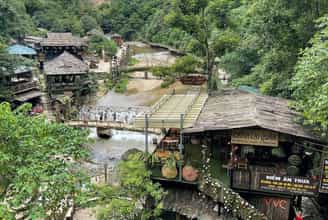
Where is Cat Cat village? Cat Cat village is a small village located in Muong Hoa valley in Lao Cai province; About 2km from Sapa town center. Cat Cat village has long attracted tourism enthusiasts because even though it is only a small village, this place is covered with the green of mountains and forests, terraced fields mixed with the rustic and simple features of the houses. Small is built from wood. Thereby, giving visitors a sense of simplicity in contrast to the hustle and bustle of the city. Directions to Cat Cat village. From Sapa town center, there are many different ways and means that you can experience to get to Cat Cat village: 1. Trekking For those who love enjoying natural landscapes and want to have a clearer view of the daily lives of local people, trekking is definitely a great choice for you! Trekking not only helps you improve your physical fitness, the authentic experience makes the trip more memorable, but it's also completely free. 2km is the distance from Sapa town to Cat Cat village, if you like it, you should try it once! If you love the beauty of Sapa and want to see more of the beautiful scenery here, you can see more about trekking at Ky Quan San - Sapa's paradise in the clouds and Bach Moc Luong Tu - one of the four highest mountains. our country. 2. Rent a motorbike For those who want to travel more conveniently, you can choose to rent a motorbike to cross the roads from Sapa to Cat Cat village. The road is not too difficult or rough and is short, so you don't need to worry too much. Just drive carefully and drive at a moderate speed. Motorbike rental prices in Sapa range from 100,000 - 240,000 VND/day. 3. Rent a bicycle In addition to trekking and renting motorbikes, we can also experience the bicycle rental service to go to Cat Cat village. Normally, hotels in the tourist town of Sapa will have this service available, you just need to ask the receptionist, rent a car and go. Bicycle rental prices in Sapa range from 120,000 - 150,000 VND/day. This is also a way to bring a new experience to your trip to Cat Cat village. If you have the opportunity, invite your friends to try cycling together! What time should you travel to Cat Cat village? Cat Cat village is located in the Northwest high mountains, so this place has cool air all year round, each season is beautiful in its own way with outstanding characteristics. Spring is adorned with peach and plum blossoms; summer of bright yellow mustard flowers; The autumn of the bright golden rice fields and finally the winter of white snow covering every scene like a movie scene. For those who have never seen snow, try coming to Sapa in December to see the cherry blossoms blooming amidst the white snow and immerse yourself in the highland festivals. What to do in Cat Cat village? Coming to Cat Cat village, there are many things worth experiencing. First of all, when coming to the village, people will buy tickets to enter the gate to visit. Tickets for adults are 90,000 VND/person and tickets for children are 50,000 VND/person. At the beginning of the tour, people will mainly move on foot and motorbikes will be limited in entering and leaving this place to avoid affecting visitors. One of the must-try experiences is renting ethnic costumes to transform into ethnic boys and girls in extremely special clothes adorned with hairpins. Next is to buy handicraft items made by the skillful hands of local people to bring back as gifts. Here, items such as earrings, bags, costumes,... look extremely unique and stand out thanks to the brocade patterns and motifs embroidered onto the products, bringing bold artistry and character. culture of highland ethnic people. Some notes when visiting Cat Cat village. Before going, choose clothes suitable for the weather to avoid cold or hot weather. Book hotel rooms in advance to ensure availability when traveling during peak season. Limit littering in public places to protect the environment, natural landscape and living space of local people. Plan in advance (like shooting angle, lighting,...) to have beautiful virtual photos Choose comfortable shoes, sneakers, etc. for convenient movement because the path in Cat Cat village will be uneven and sometimes slippery due to a nearby waterfall. Bring medication, sunscreen, sunglasses, and long-sleeved clothes to avoid the midday sun on the high mountains. Cat Cat village is one of the places you must definitely try when coming to Sapa to have the opportunity to see more clearly the lifestyle and culture of the H'mong ethnic people here along with the vast mountain and forest scenery. The terraced fields stretch out extremely peaceful and beautiful.
Lao Cai
7934 view
 AI Travelviet